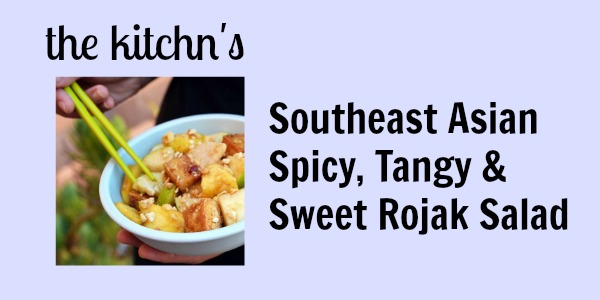

I am not even sure how to classify this beautiful mess known as rojak. It is beautiful though: sweet, sour and spicy all come together to make magic happen.
Part fruit salad, part vegetable salad, this tasty dish can even have protein (like tofu or prawns) or fried dough in it. Those may not be the healthiest elements, but as a fruit salad this rocks!

It comes on a plate or in a bag with skewers to eat each piece one at a time. The sauce can be a bit heavy and there are definitely some less than healthy elements to this awesome fruit salad, but it can be an easy way to up your fruit intake, especially if you find yourself with under-ripe or fruit that is not as sweet as you had hoped.
Overall the flavor and the base of so many glorious fruits and vegetables. I just can’t even… yum!
Rojak has many variations all over Southeast Asia, from China, to Indonesia to India to Singapore to Malaysia. The Chinese version calls for dough fritters known as youtiao, where the Indian version uses egg and the Singaporean dish calls for tempeh. Rojak means “mix” and this dish definitely lives up to its name!
There are about a million different variations of Rojak, but here are the health benefits associated with some of the most common ingredients:
Pineapple– Pineapples contain an enzyme called bromelian. This enzyme acts as a tenderizer in meat (it also prevents gelatin from gelling) and it eases inflammation, which may help decrease the pain of arthritis. Pineapple is also a source of immune system boosting vitamin C.
Apple– Apples contain about 1/5 of your fiber needs for the day (about 4 grams) but about half of that fiber is in the peel, so definitely keep the peel on! Apples contain both insoluble and soluble fiber- their soluble fiber, pectin, aids digestion, and may help decrease cancer and heart disease risk. They also contain boron, a trace mineral which helps to harden bones.
Jicama– Jicama adds some serious crunch and a crispy, mild texture. It is high in fiber (good for aiding weight loss) and it is also a surprising source of vitamin C.
Cucumber- Cukes are a good source of water and electrolytes, making them a great choice to help cool you down and in the summer. Not to mention their signature crunch makes them very refreshing in the heat of summer. They are low in calories but are a source of fiber (keep that peel on!). They contain antioxidants and vitamin K- which promotes bone growth an limits neurological damage.
Mango– These tasty fruits are packed with beta-carotene which can help decrease signs of aging. They also contain plenty of vitamin C, another potent anti-aging nutrient- it helps boost collagen production keeping your hair, skin and joints all looking and feeling younger.
Pear– These are one of the highest fiber fruits and they are also one of the fruits least likely to cause an allergic reaction. They are a source of many vitamins and minerals and their high flavonoid content may reduce the risk of heart disease and stroke.
Peanuts– While peanuts are not actually nuts (they are legumes), they have many of the same health benefits as tree nuts according to an article from Harvard. Like tree nuts, peanuts may help prevent heart disease but at a fraction of the price.
Sesame Seeds– Sesame seeds are a good source of essential minerals including calcium, magnesium, a good source of fiber and the B-complex vitamin thiamin. All of which work to improve cardiovascular health, lower cholesterol and decrease inflammation.
Tamarind Paste– Adds a unique sweet, tangy flavor to everything it touches. It can have a mild laxative effect. It is rich in fiber, which helps bind toxins in food and remove them from the body. It also has some antimicrobial effects.
Chili Paste (Sambal Oelek)– Made from fresh, red, spicy chilis, salt and vinegar, this tasty but spicy condiment hails from Indonesia (want to make your own? Try this recipe. It adds a serious kick and makes a great condiment or ingredient in sauces or marinades or anything that could use a little kick. It is also a source of capsaicin, an antioxidant that may help improve digestion, fight infection and act as an antioxidant.
Dried Shrimp Paste– Made of fermented shrimp and salt, shrimp paste actually has measurable amounts of omega-3 fatty acids, especially in the form of DHA. DHA plays an important role in brain and heart health.
Palm Sugar– While it is slightly lower on the glycemic index, palm sugar still has the same amount of calories and carbohydrates as any other sugar. Use it is moderation! Can’t find palm sugar? Brown sugar is a good substitute.
Next time you find yourself looking for a new fruit salad recipe, give one of these easy rojak recipes a try: