
 I truly believe that you cannot experience a culture without experiencing their food. Fortunately, Krakow has a walking tour that helped us experience the culture through food. We walked to several small restaurants, markets and shops that are off the beaten tourist track and are favorites of the locals. Our guide grew up in a small town outside of Krakow and had a passion for food and a love for Polish food in particular. For two hours we followed her around, listening to her stories and trying a variety of delicious Polish foods!
Polish food is traditionally heavy in meat, especially pork, beef and chicken. Root vegetables (potatoes and beets) and cabbage are very popular in restaurants and traditional dishes, but markets are abundant and other veggies are readily available as well. Cheeses, especially fresh cottage cheese, are very popular and are at their best fresh from the markets. Apples are just about everywhere and in just about everything- they are also exceptionally delicious! Polish food pulls influences from its neighbors and it’s heritage- there is lots of hearty food and plenty of food pulled from Jewish traditions.
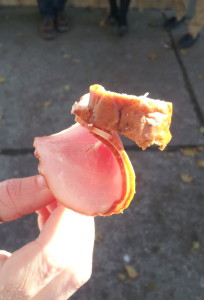
Our guide joked that if food in Poland is not pickled, it’s smoked- we definitely found that to be true. Polish kielbasa is popular as are other smoked meats like chicken or pork. This may be a bit of a problem in the future as the EU has restrictions on how much meat can be smoked (both for the health of the citizens and the environment). As Poland becomes part of the EU, the traditional methods of smoking meat may come under fire. Fortunately, there are no restrictions on pickling! The pickling process is a little different than what I was used to, it involves fermenting instead of vinegar. Overall, this produces very sour, tangy vegetables like gherkins or cabbage.
Looking for Something a bit Healthier?
A word of warning if you are looking for a vegetarian meal- the word vegetarian on a menu does not necessarily mean it does not have meat. While on our food tour we learned from our guide that vegetarian may mean chicken, she then explained that in Poland vegetarian does not mean “no meat” instead it usually just meant red meat was not the focus of the dish. At one point during the Middle Ages, Kraków was considered a safe haven for persecuted Jews. One of the things that the Jewish culture introduced to Poland was buckwheat, also known as kasha (or kasza, in Poland). This whole grain is now a staple of the traditional Polish diet.
Must Try:
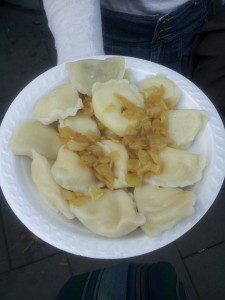
Pierogi– Pierogi (pierogi is actually plural- it is incorrect to say “pierogis”) can be filled with anything, from potatoes and cabbage to cottage cheese to fruits like apples or plums. Look for my favorite, Ruskie pierogi- filled with potato and cottage cheese. Pierogi are made with a dough of flour, salt and warm water (it must be warm, our guide told us, that is the secret of Polish grandmothers). Traditionally, the pierogi are boiled, if there are leftovers, they are reheated by frying or baking.
Obwarzanki– a cross between the pretzel and the bagel these tasty snacks are sold (for about $0.50) on the streets in small carts all over Krakow. The most traditional toppings include sesame and poppy seeds, but other toppings available include salt and cheese.
Apples– Fresh, whole apples. Yup, just as is! Poland has excellent apples, and grow tons of them. Pick one up at a market or in the grocery store for a great, healthy and super tasty snack!
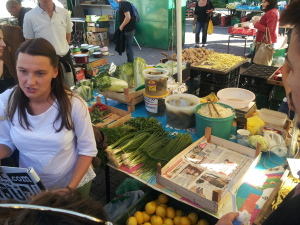
Pickled Cabbage/Pickled Cucumbers– Unlike the pickling that I am accustomed to, Polish pickling does not use vinegar, instead foods are fermented. It was a different flavor for sure, and as someone who does not really care for pickles, I thought these were very good. The flavor was much more mild, and more sour. Look for these at the farmer’s markets located throughout the city.
Golabki– stuffed cabbage rolls- cabbage leaves are stuffed with pork, mushrooms, spices and buckwheat or rice and served with a tomato or mushroom sauce. I only had the tomato, but it was absolutely wonderful and comes highly recommended!
Zurek– a creamy, slightly tangy soup, this was my favorite soup I tried in Poland. It gets its slightly sour flavor from its rye sourdough base but gets a further depth of flavor from ham, sausage, potatoes, mushroom and an egg. While it is a traditional Easter food (a breakfast food at that!) in many of the small farming villages throughout Poland it is still served on a regular basis, often as a breakfast food.
Bigos or Hunters Stew– a hearty, meaty, “stick-to-you-ribs” kind of soup, loaded with various meats, mushrooms and cabbage (fresh or sauerkraut), it is often served with potatoes or rye bread. Bigos means “cut with sword” and it is traditionally made with cabbage and whatever meat is on hand and cooked for three days (it is supposed to get better as it sits). Well stocked kitchens in Poland are never without Bigos to serve to unexpected visitors.
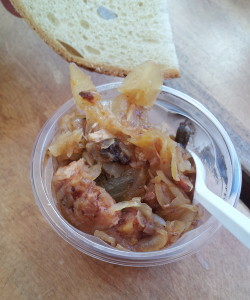
Polish Kielbasa– smoked, dried and highly spiced sausage. A Polish specialty!
Apple Szarlotka– A fried dough with apples and covered with powdered sugar, these are also throwbacks to communist times when flour was plentiful (if you had relatives in the country) but meat and other foods were scarce. Poland grows more apples than just about anyone in the EU, so they have never been scarce. The szarlotka are soft, warm, sweet and delicious, a bit reminiscent of funnel cake.
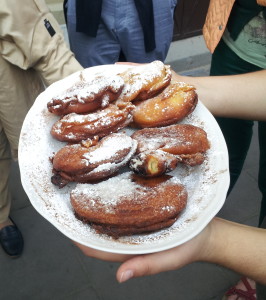
Zagryzka (“After Bites”)- for the more adventurous eater, “after bites” – look for pickled herring topped with raw onions and bread spread with smalec- are throwbacks from Communist times in Poland. During Communist rule westernized mixed drinks were all but non-existant, instead there was just straight vodka. After bites were invented to kill the burn, and according to our guide their acidity and grease helps kill the flavor and helps the body digest the vodka. While these fell out of favor after the fall of Communism, there has been a recent upswing of traditional foods in Poland and after bites are back.
Zapiekanki– almost like personal pizzas, these are baguettes sliced in half lengthwise and loaded with toppings, sauces and cheese, seriously good late night food or even an afternoon snack!
Wawel Chocolate– a Krakow institution, this chocolate shop has been around since 1898 and managed to survive both world wars!
What to Drink:
Vodka, of course!– Poland’s most famous drink (and the only Polish word Americans can say correctly, according to our guide). Vodkas are kept chilled and come in a variety of flavors made with real fruit including cherry, quince, lemon & honey, walnut and caramel. These are made for sipping as opposed to shooting.
Look especially for sliwkowa, or plum flavored vodka and Zubrowka (bison grass vodka)
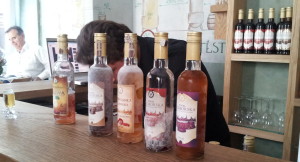
Hot Chocolate -from Wawel, creamy and thick and some of the best hot chocolate ever! It was recommended by our food tour guide, the concierge at our hotel and almost everyone who had tried it!
Kwas Chlebowy– naturally carbonated (fermented) soda made with rye bread. Tastes better than it sounds!
Restaurants to Try:
Przystanek Pierogarnia– this itty bitty restaurant (it only seats about 6 and the only seating is outdoors) turns out some of the best pierogi in the city. Pick some up to take away or enjoy on one of the small tables outside. The menu is small, there are only about 8 different kinds of pierogi and when they are out, they are out but everything is delicious. Ask for a mixed plate to get a variety of different kinds, select a few you want to try, or get all one kind, no matter what you order, you cannot go wrong!
Restauracja Samoobslugowa– a cafeteria style restaurant that nonetheless has a very, very tasty Zurek. Again, it is mostly frequented by locals, but the prices and the food are very good!
Delikatesowo– more deli then restaurant, this gem is located in the Jewish district and is a great place to go for a sandwich, homemade, organic ice cream (we had stout and blueberry flavored ice cream) kwas Chlebowy, or to pick up a local beer for their astounding collection! They also make vegan pierogi and a variety of other vegan products! Local and family run.